
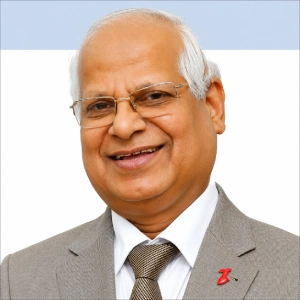
Rajendra K. Gokhroo
Jawahar Lal Nehru Medical College, IndiaPresentation Title:
A new proposed Comprehensive Expanded Coronary Artery Lesion Description (CALD) code system and Coronary artery angiographic segmental (CAAS) classification for Coronary Arteries – A mathematical model: Indian Society of Cardiology (ISC) working group Code for physician’s ease
Abstract
Background: We have propose a simplified expanded comprehensive Coronary Artery Lesion Description (CALD) code system and Coronary artery angiographic segmental (CAAS) classification for coronary arteries relevant to interventional cardiologists and cardiac surgeons to assess pre procedural amount of myocardium at ischemic risk and to plan out expected anatomical site for stent or graft implantation pre procedurally . Comprehensive Coronary Artery Lesion Description (CALD) code system has been developed to overcome the limitations of anatomical variations in coronary arteries to define the exact location of lesion and its anatomical characteristics, hence preparing a mathematical model to express coronary artery lesion, unaffected by anatomical variation of coronary arteries for physician’s ease.
Methods: This is a single centre, retrospective, observational study. 100 patients were undertaken to understand and validate CALD code system and CAAS classification.
Results: CALD code system has 9 positions in sequence to depict various characteristics of coronary artery lesion as a code. Position 1- vessel involved, Position 2- vessel segment- I (first 40 mm), II (second 40mm), III ( distal after 80mm remaining segment), Position 3-lesion quantification, Position 4- lesion length, Position 5- side branches description, Position 6- other features ‘JECTO DS-Z (‘JCTO’ in basic classification) depicting Junctional location, Ectasia, Calcification, Thrombus and tOrtuosity , Dissection, Stent description and Z for none of the above features respectively. To include physiological characteristics of coronary flow in the epicardial vessels and in micro circulation, code is expanded to include these at Position 7-TIMI (Thrombolysis In Myocardial Infarction) flow and Position 8- MBG (Myocardial blush grade). Dominance of coronary circulation has been included at as Position 9- dominant vessel.
For Left main coronary artery (LMCA) lesion description and vessel characteristics are depicted by a still simpler code in sequence of four positions contrary to nine positions used for LAD, LCX and RCA vessels. The code sequence follows as Position 1- vessel involved, Position 2- vessel segment, Position 3-lesion quantification, Position 4- other features CT DS-Z (Calcification ,Thrombus , Dissection, Stent description and Z for none of the above features) respectively.
Conclusions: This is a simple, semi-quantitative, easy to understand and memorize description of the coronary artery lesions in terms of mathematical model of coronary arteries for reproducibility with macro and micro coronary circulation flow characteristics in live mode for ease of physicians and cardio vascular surgeons.
Biography
Rajendra Kumar Gokhroo is a distinguished Indian cardiologist, medical educator, and researcher with over 40 years of experience in cardiovascular medicine. He earned his DM in Cardiology from PGIMER, Chandigarh, and is a Fellow of the American College of Cardiology (FACC, USA). He served as Senior Professor and Head of the Department of Cardiology and later as Principal of J.L.N. Medical College, Ajmer.
He has served as President of the Indian Society of Cardiology and Editor-in-Chief of the Indian Journal of Cardiology. Internationally recognized as a pioneer in ulnar angiography and angioplasty, he has performed over 3,500 procedures. He was the first Indian cardiologist to present a Late-Breaking Clinical Trial at the American College of Cardiology and has received multiple ACC awards for outstanding research. With over 300 scientific publications, numerous national honors, and three Padma Shri nominations (2022, 2023, and 2025), he continues to make significant contributions to cardiology and medical education.

Organization Location
1309 Coffeen Avenue, STE 1200, Sheridan, Wyoming 82801, USA
General Enquiry
contact@scientexconferences.com
Finance Enquiry
finance@scientexconferences.com
Call us at
USA : (+1) 323 743 2777